Appendix — screens

The rest of the
evidence.

Nine more screens from a running system. Nothing here is a mockup or a render — these are the same builds our operators log into. Click any to enlarge.
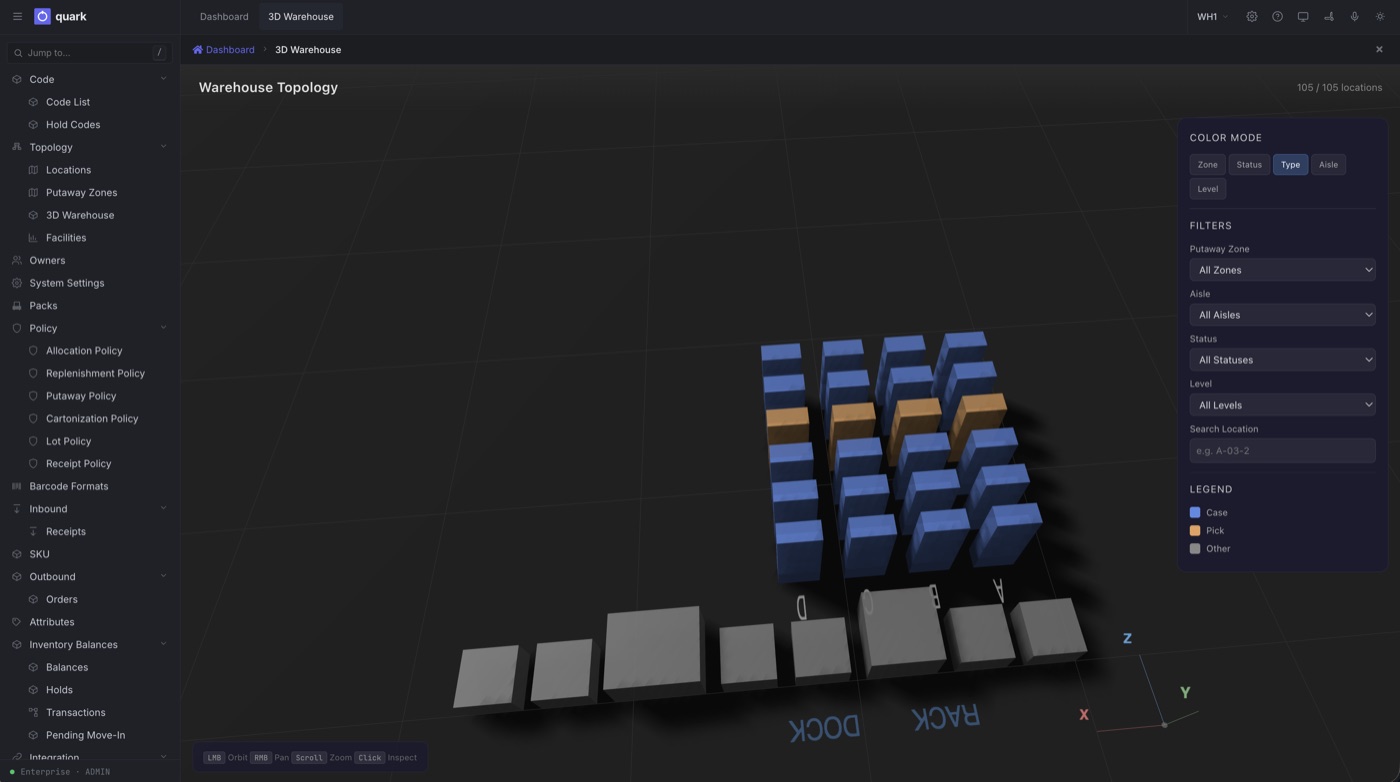
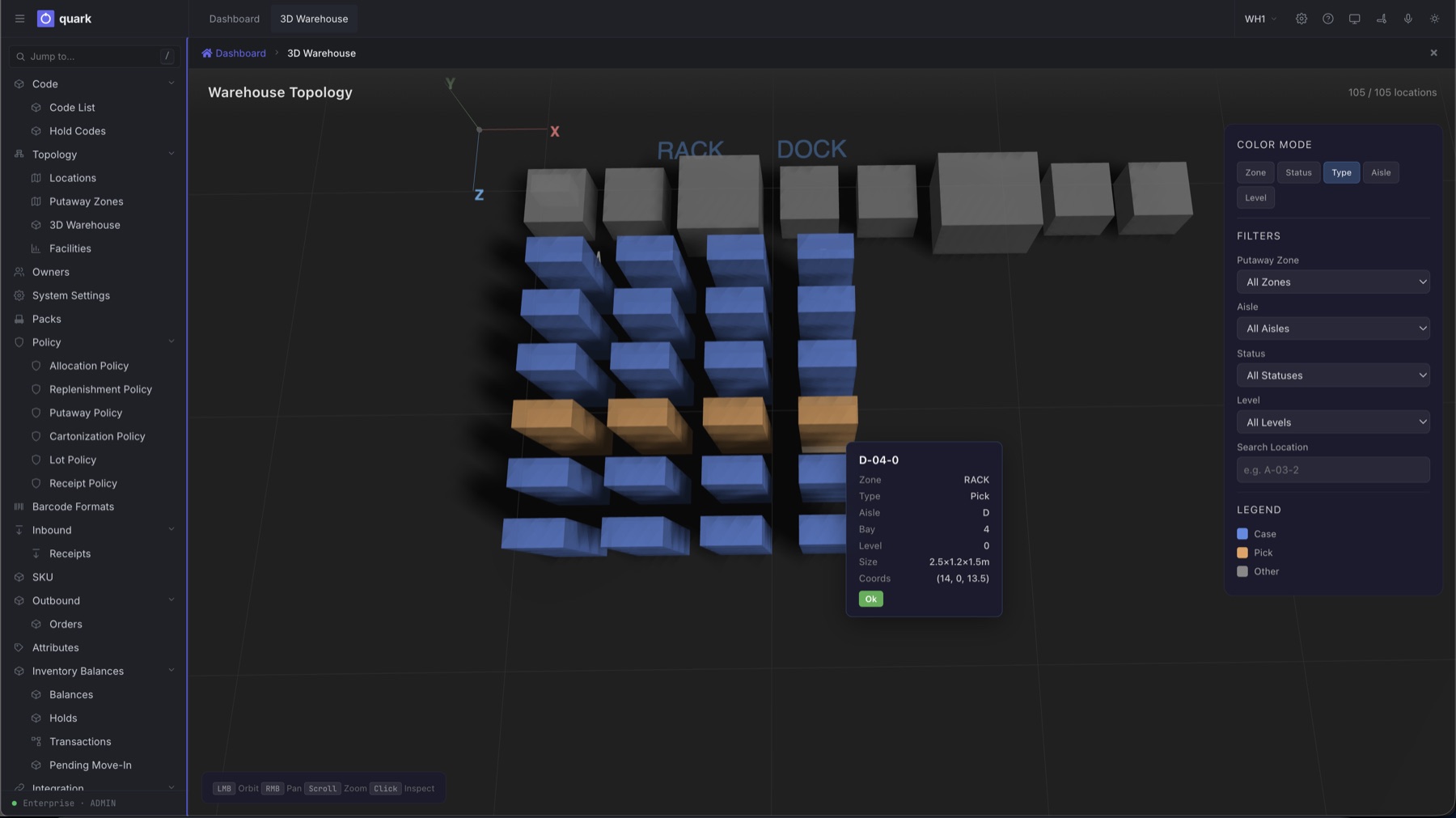
Three-dimensional warehouse topology showing racks, aisles and zones
Topology. The warehouse as it is actually shaped — racks, aisles, zones, drawn from the same metadata the pickers walk.
Inspected bin showing its zone, type, aisle, bay, level and dimensions
Any bin, inspected. Zone, type, aisle, bay, level, dimensions.
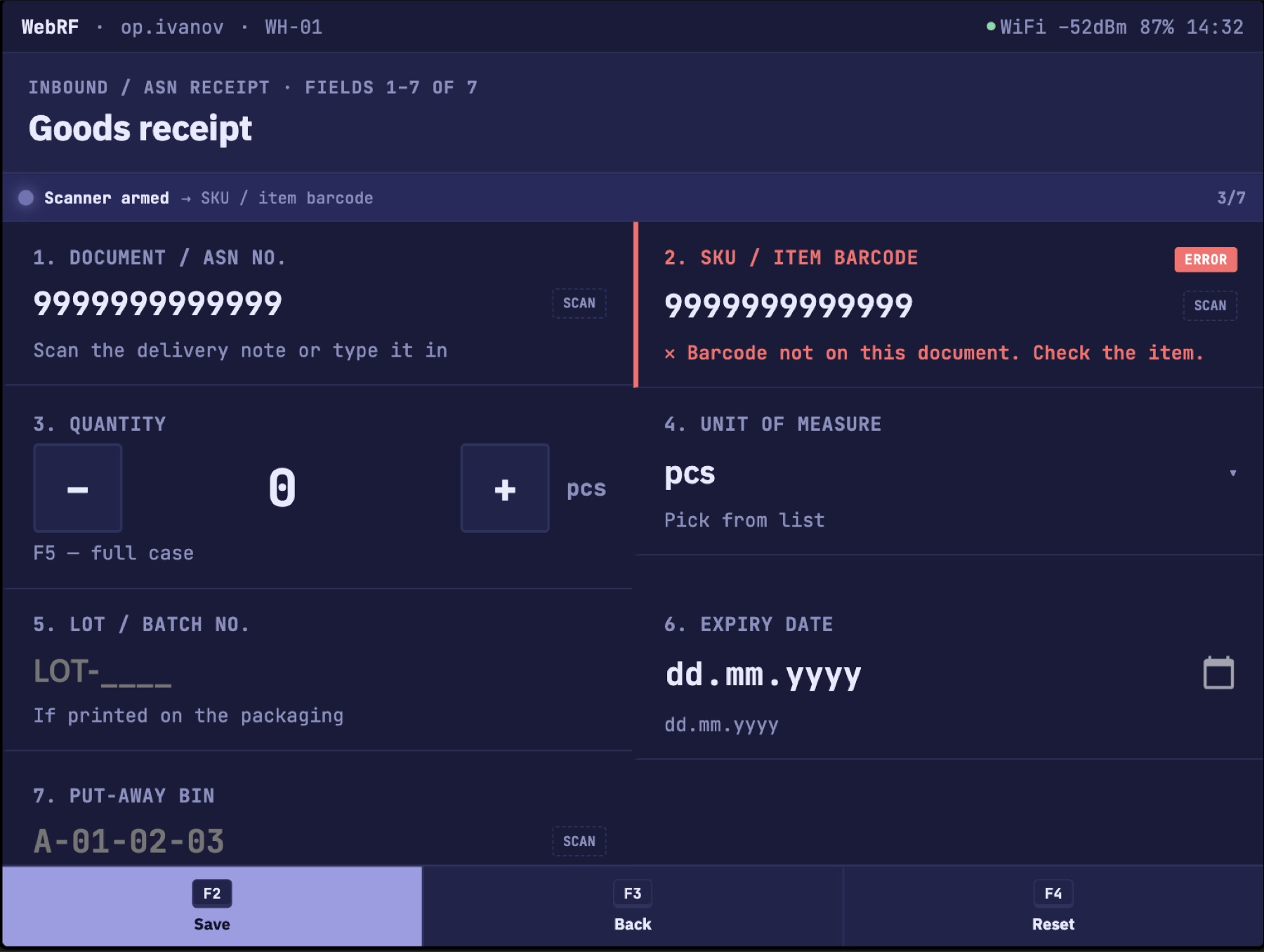
Web RF terminal refusing an entry with a validation error
Validation, on the device. The rule fires where the work happens, not in a nightly report.
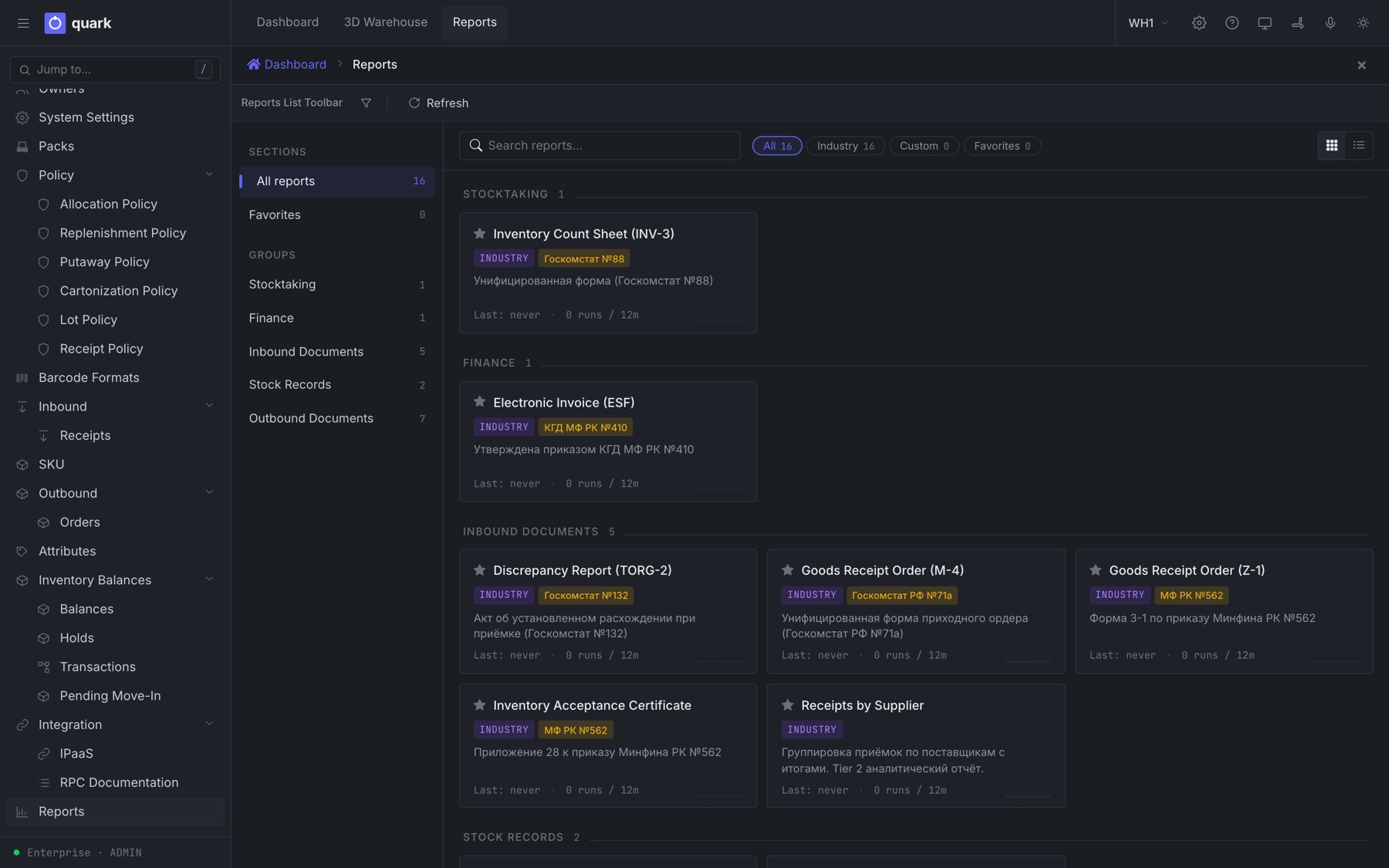
Report library showing sixteen statutory warehouse forms grouped by section
Statutory documents. Sixteen forms — TORG‑2, M‑4, M‑11, INV‑3 — out of the box, not as a customisation project.
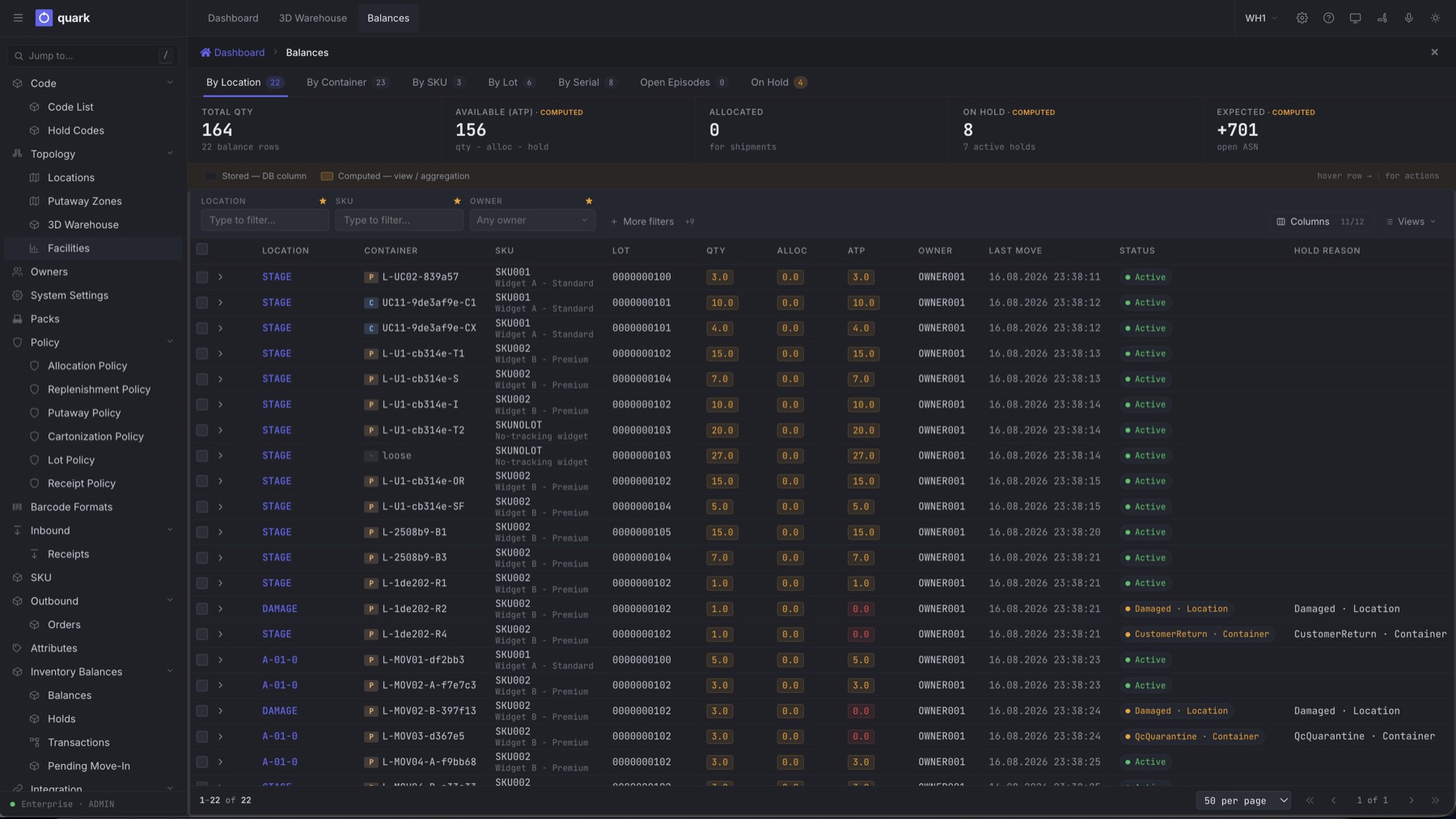
Inventory balances by location with hold reasons for damage, customer return and QC quarantine
Balances. One stock figure, six ways to read it — with holds and quarantine spelled out rather than netted away.
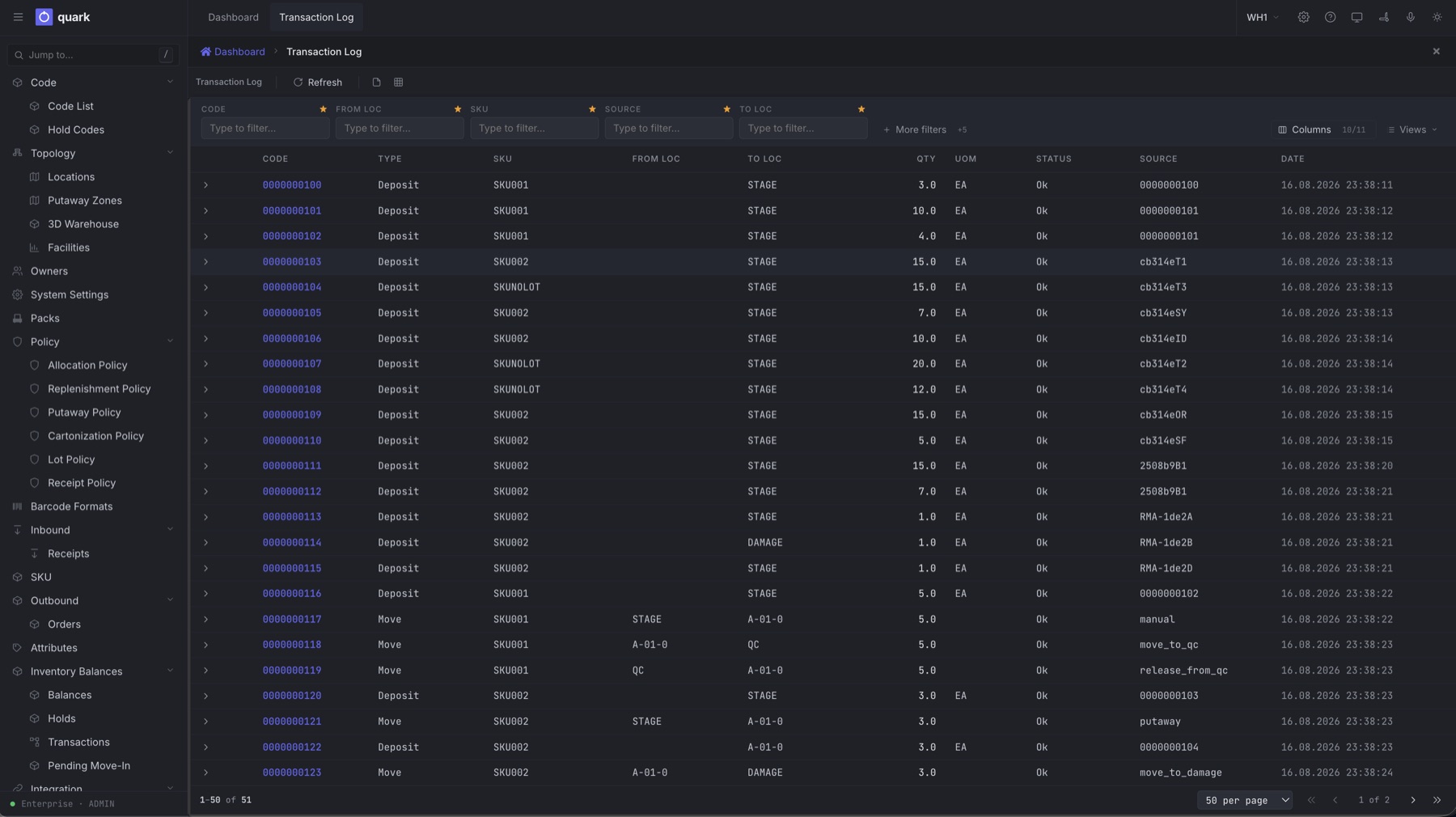
Transaction log listing deposits and moves, each with the reason it happened
Movements. Every move carries the reason it happened — put‑away, QC, damage, return. This is what an auditor reads.
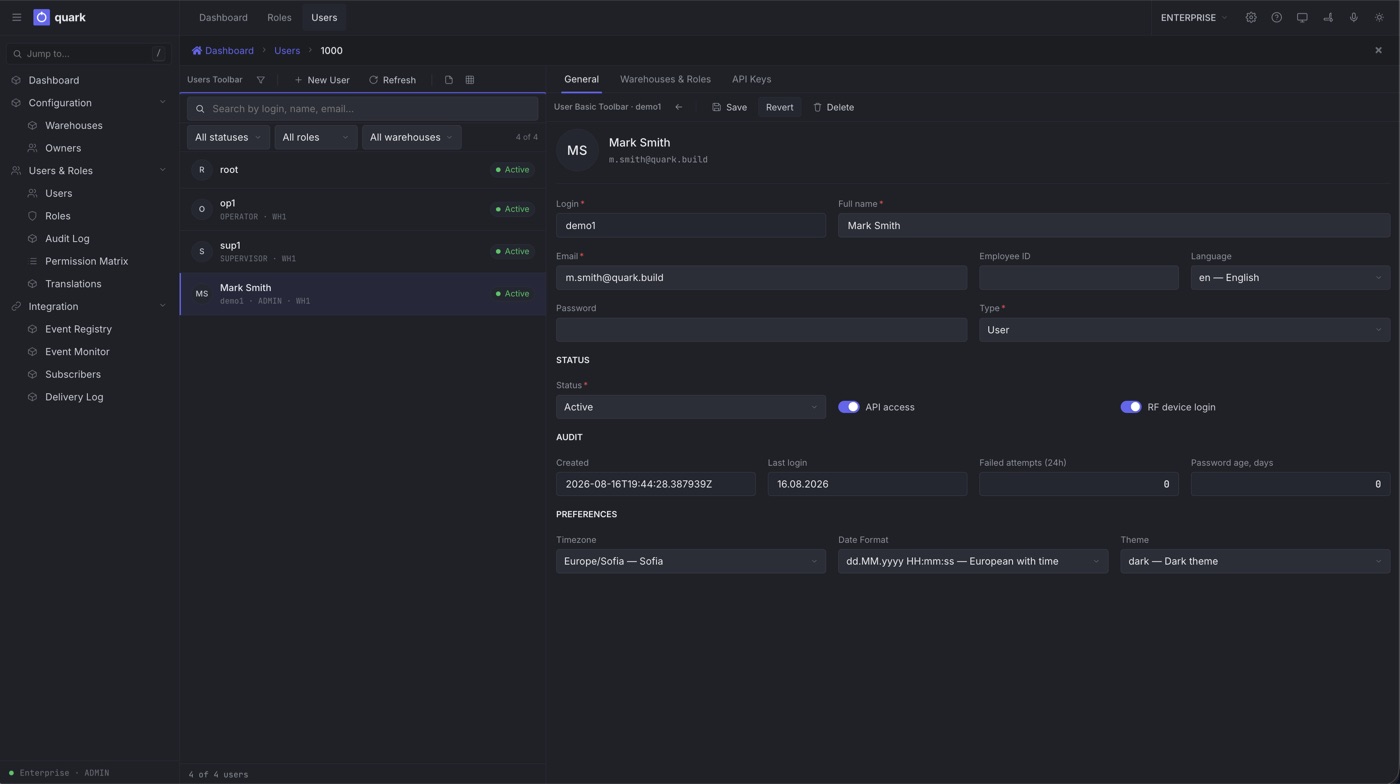
User record with API access and RF device login toggles and an audit block
Identity. API keys and RF device logins sit beside human accounts — because agents and scanners are actors too.
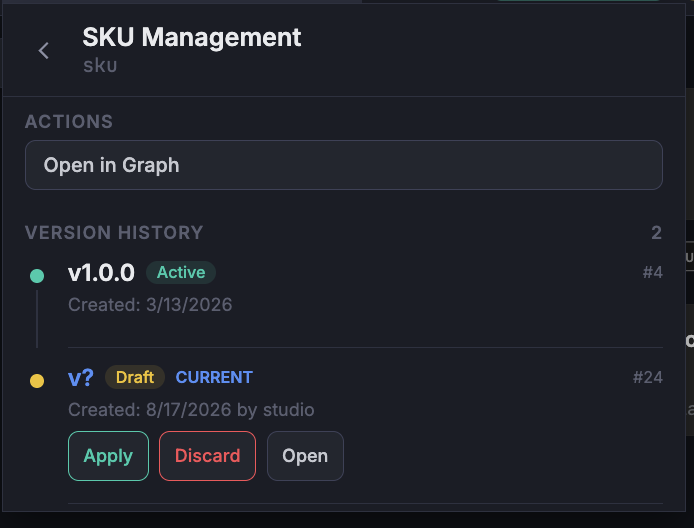
Studio version history panel listing an active version and a current draft with Apply, Discard and Open
Version history. One active version, one current draft, and three ways to end it — apply, discard, open.
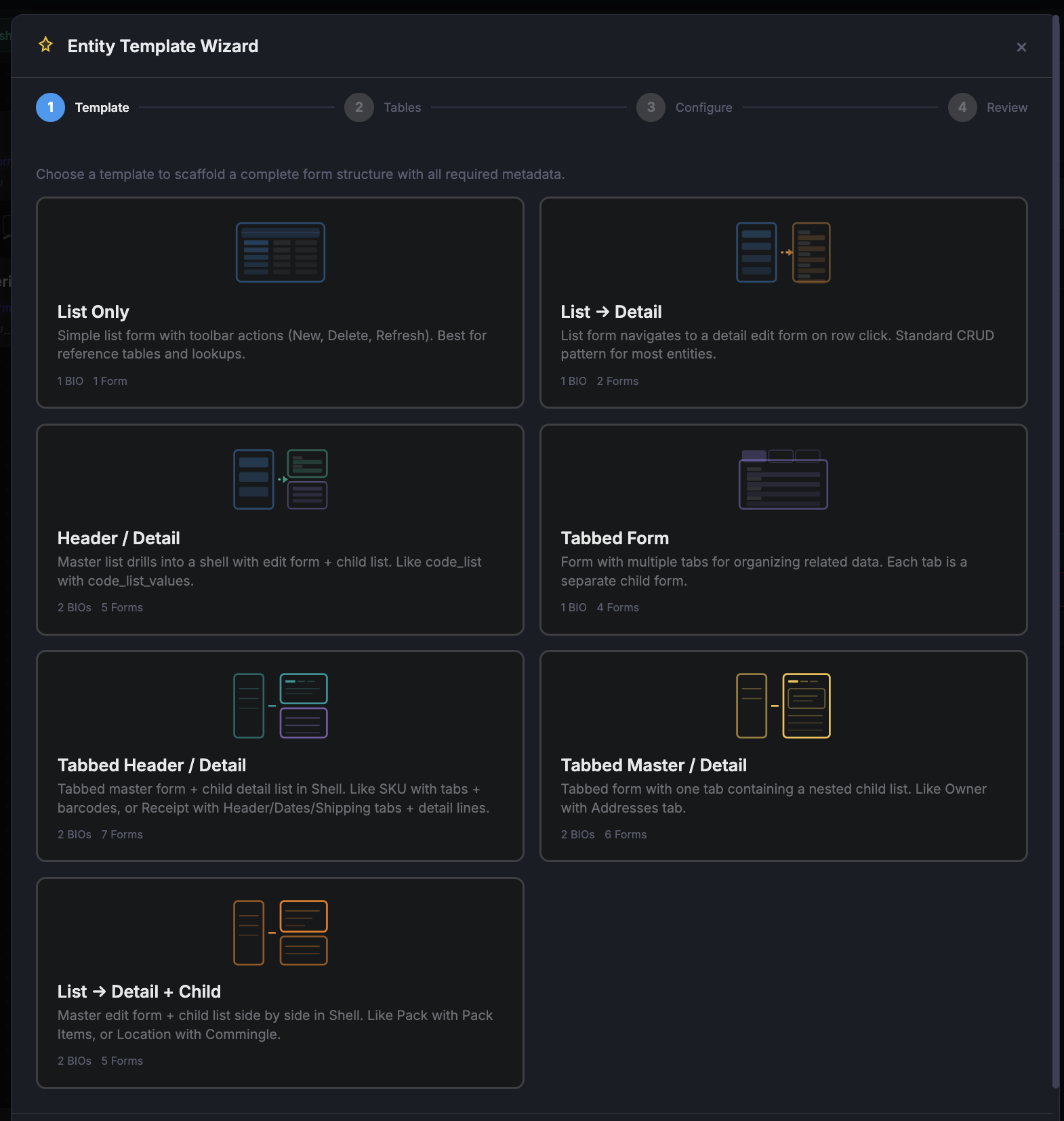
Entity Template Wizard offering seven form templates, each with its business-object and form count
Scaffolds. Seven templates, each declaring how many business objects and forms it will produce.
Back to the argument — the six plates that carry it. Return to Quark →